Crawlspace pest and moisture barrier defense creates an unbroken line of structural protection between exposed soil and structural subflooring. Older residential properties in New Castle County, specifically historic…
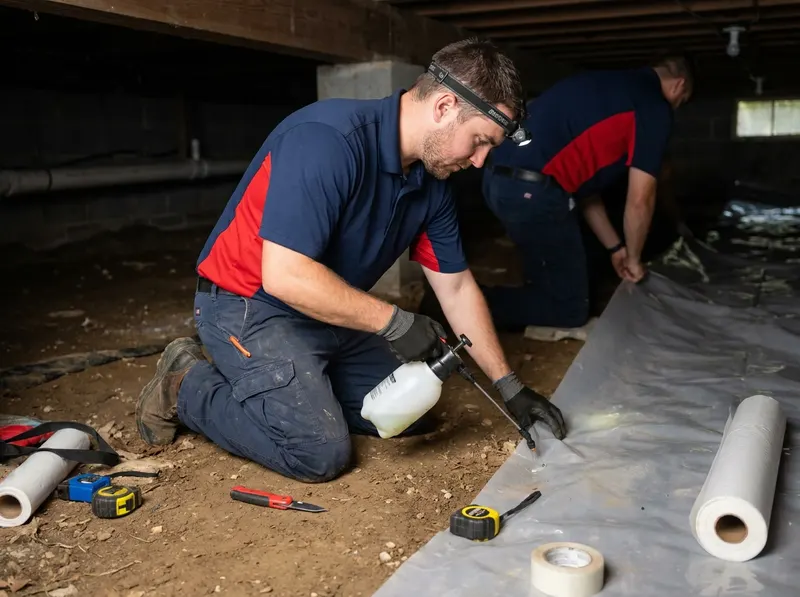
Crawlspace pest and moisture barrier defense creates an unbroken line of structural protection between exposed soil and structural subflooring. Older residential properties in New Castle County, specifically historic brick rowhomes in Quaker Hill, stone-foundation builds in Wawaset Park, and pre-war homes near Delaware Avenue and Trolley Square, frequently feature unsealed earthen floors. Earth-to-wood contact paired with high ambient humidity from the nearby Brandywine Creek and Delaware River produces relative subfloor humidity levels above 70 percent. This moisture profile draws subterranean termites seeking cellulose and camel crickets feeding on fungal surface blooms. Over time, elevated wood moisture levels over 19 percent soften pine and oak floor joists, inviting severe powderpost beetle infestation and structural rot. Installing an ASTM E1745-compliant 12-mil or 20-mil puncture-resistant polyethylene barrier halts soil-gas evaporation and eliminates the wet microclimates pests require for survival.
Selecting crawlspace barrier mitigation depends strictly on subterranean foundation dynamics. Properties with dirt floors experiencing pooling ground water require exterior drainage diversion alongside vapor retarders, because a surface sheet does not replace primary sump evacuation. For dry dirt crawlspaces with seasonal humidity spikes, a sealed 12-mil barrier bound to masonry foundation walls with polyurethane mastic provides absolute insect denial. The trade-off centers on floor accessibility versus encapsulation scope: open vent screens permit cross-flow airflow but allow exterior ambient humidity during humid Delaware summers, whereas complete vent sealing paired with subfloor dehumidification maintains interior joist humidity below 55 percent at a higher initial installation cost.
Executing crawlspace remediation follows four methodical steps. First, technicians clear contaminated subfloor debris, decaying construction lumber, and rodent nesting materials down to native soil. Second, ground surfaces are raked smooth and leveled across foundation piers. Third, technicians lay reinforced vapor barrier panels, overlapping all edge seams by 12 inches and sealing joints with heavy acrylic tape. Fourth, all crawlspace foundation wall edges, plumbing penetrations, and vent openings receive mechanical fastenings with 1/4-inch corrosion-resistant steel mesh to deny entry to rodents, followed by targeted non-repellent perimeter applications against wood-destroying insects.
Every job gets a firm, written price after a free on-site visit.
Tell us about your crawlspace pest and moisture barrier defense job in Wilmington and we'll send a clear, written quote, usually the same day.
 Calviro Pest Defense