Pest control service in Wilmington requires addressing the pest vectors unique to Delaware river corridors, historical stone masonry, and seasonal humidity shifts. Older brick properties in neighborhoods like Quaker Hill and Cool Spring face persistent entry pressures from Norway rats and house mice during autumn cooling cycles.

A professional pest control service in Wilmington is an integrated pest management operation that identifies, eliminates, and blocks structural and wood-destroying insect and rodent populations across residential and commercial properties.
Every service reflects the same meticulous attention to detail, whether it's a single job or a larger pest control service project across Wilmington.
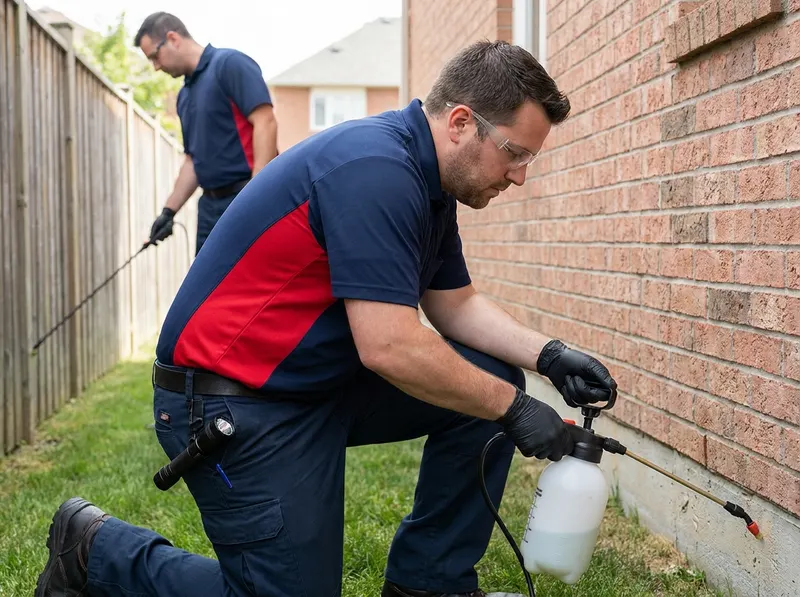
Comprehensive perimeter application targeting crawling insects including American cockroaches, German cockroaches, centipedes, earwigs, and odorous house ants. The process establishes a continuous six-foot exterior chemical barrier along foundation walls, treats window wells, basement walkouts, and utility entry points, and applies targeted micro-encapsulated formulations inside crawlspaces to halt internal migrations. Technicians inspect foundation sills, expansion joints, and threshold plates to identify harborage microclimates. Interior interventions focus strictly on crack-and-crevice treatments, void dusting behind plumbing chases, and placing pheromone monitoring boards beneath kitchen sinks and appliances. Applications maintain long-term residual integrity through alternating chemical modes of action to prevent population tolerance.
Get a quote →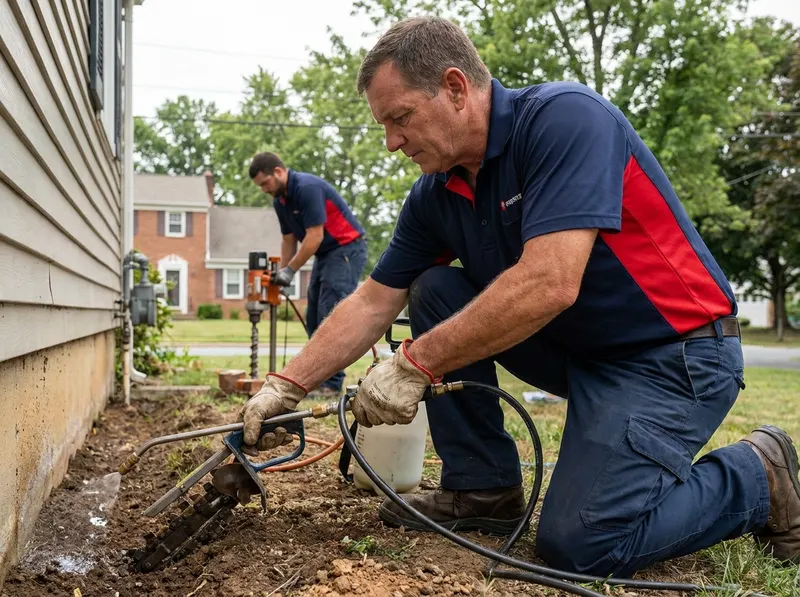
Methodical soil barrier and bait matrix installations designed to eliminate Reticulitermes flavipes colonies. Field technicians trench foundation perimeters to a depth of six inches, apply non-repellent termiticide solutions at four gallons per ten linear feet, and core-drill attached exterior concrete slabs to protect underlying load-bearing timbers. The liquid non-repellent chemical binds directly with soil particles, creating an imperceptible lethal zone through which subterranean workers transfer active ingredient molecules back to central reproductive queens via social grooming and trophallaxis. For structures with inaccessible sub-slab plumbing lines or proximity to open surface water, technicians install subterranean bait stations at 10-foot to 15-foot intervals around the outer drip line, conducting quarterly monitoring to verify colony feeding and systemic bait consumption.
Get a quote →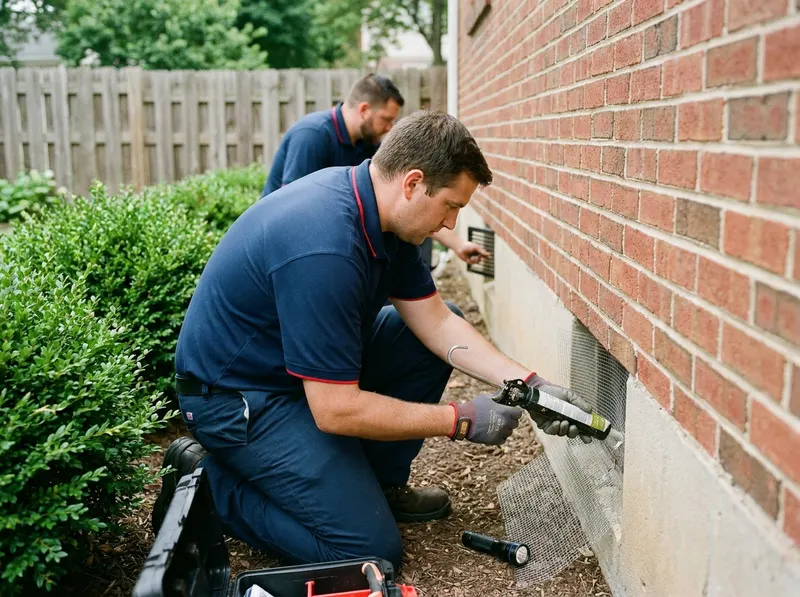
Complete extraction of Mus musculus and Rattus norvegicus combined with architectural entry point sealing. The service deploys tamper-resistant mechanical capture stations along interior sill plates and seals exterior foundation gaps, pipe penetrations, and crawlspace vents using 19-gauge galvanized steel hardware cloth, expanding polyurethane foam infused with copper mesh, and high-density elastomeric compounds. Technicians map primary runways by identifying grease rub marks, fecal density patterns, and gnawed electrical insulation within basements and attics. Exclusion protocols prioritize gaps larger than one-quarter inch at masonry-to-wood transitions, air conditioning line-set chases, garage door corner gaskets, and deteriorating basement window frames to permanently deny access to foraging rodents.
Get a quote →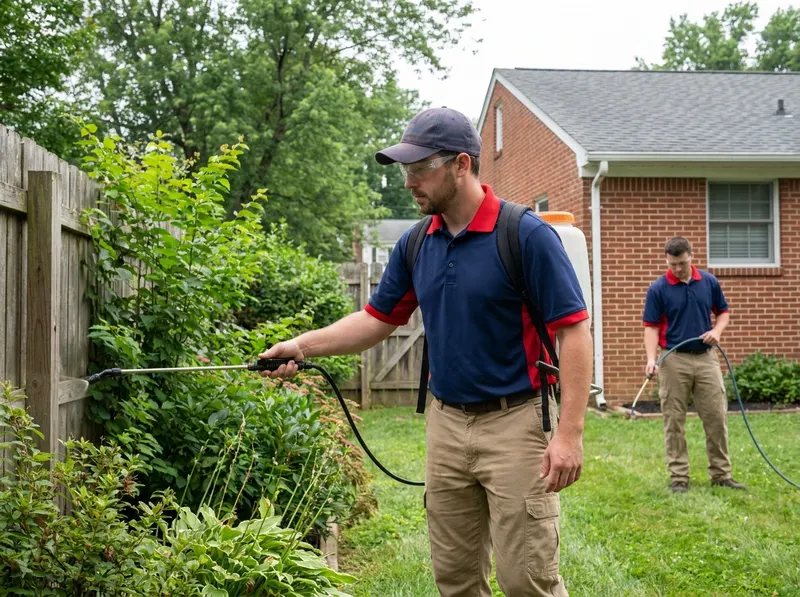
Exterior boundary misting and biological larvicide management for properties adjacent to riparian lowlands and shaded foliage. Applications focus on the undersides of broadleaf vegetation, dense ornamental plantings, and structural eaves using commercial mist-blower units, supplemented by Bacillus thuringiensis israelensis briquettes in stationary drainage reservoirs and catch basins. The mist application utilizes micro-encapsulated synthetic pyrethroids or botanical oils that adhere to the lower surfaces of foliage where adult mosquitoes shelter from daytime heat and wind. Service cycles recur every 21 to 30 days from May through September to disrupt sequential larval emergence cycles and reduce adult biting pressure across residential lawns, decks, and patios.
Get a quote →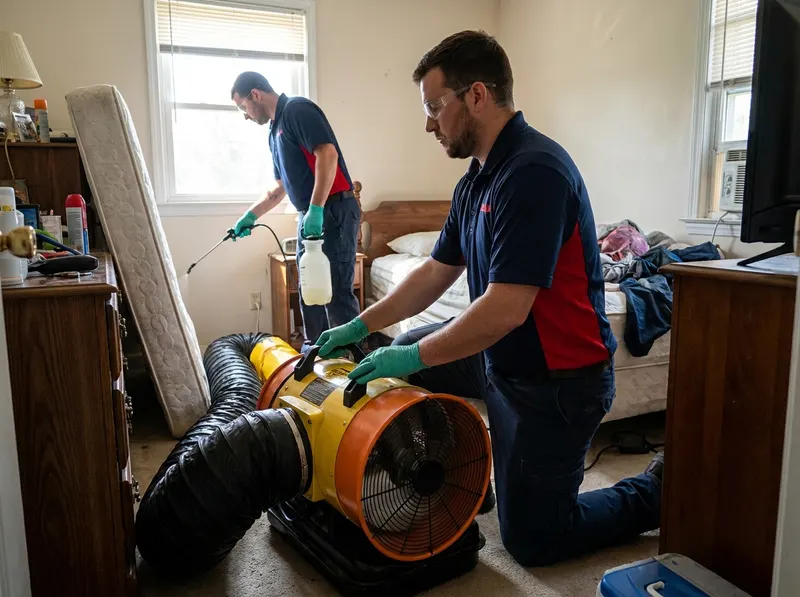
Dual-stage eradication protocols targeting Cimex lectularius infestations inside residential sleeping quarters. Technicians employ high-output electric heat systems to elevate ambient room temperatures above 122 degrees Fahrenheit for lethal thermal exposure, followed by desiccant dust applications behind baseboards, switch plates, and electrical outlets. Industrial temperature monitoring sensors and thermal imaging cameras track heat penetration into deep mattress seams, upholstered furniture frames, carpet tacks, and wall voids to ensure complete mortality of adult insects, nymphs, and eggs without damaging residential electronics or structural materials. A secondary perimeter application of amorphous silica gel dust delivers an inorganic desiccant barrier that dehydrates any late-emerging nymphs upon contact.
Get a quote →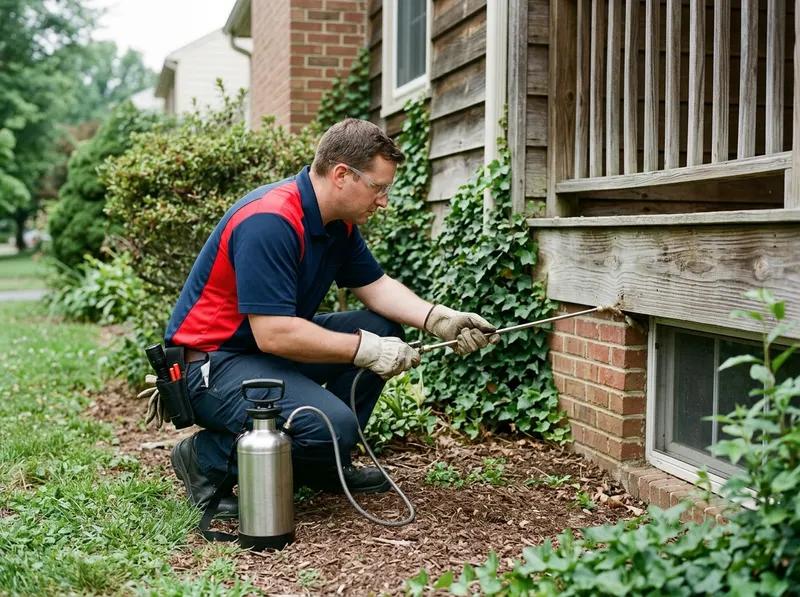
Targeted void injection and perimeter treatment to neutralize Camponotus pennsylvanicus colonies inhabiting moisture-damaged structural timbers. Specialized equipment injects non-repellent transfer insecticides directly into wall voids, door headers, and roofline moisture zones to disrupt satellite nests and eliminate reproductive queens. Field operators locate parent colonies nesting in dead tree limbs, hollow landscape ties, or exterior woodpiles within 100 feet of the foundation, tracing foraging trails that traverse overhead utility cables or overlapping roof branches. Direct application of slow-acting fipronil-based or indoxacarb baits ensures workers transport the active ingredient throughout the internal structural gallery network, arresting timber excavation before structural framing members buckle.
Get a quote →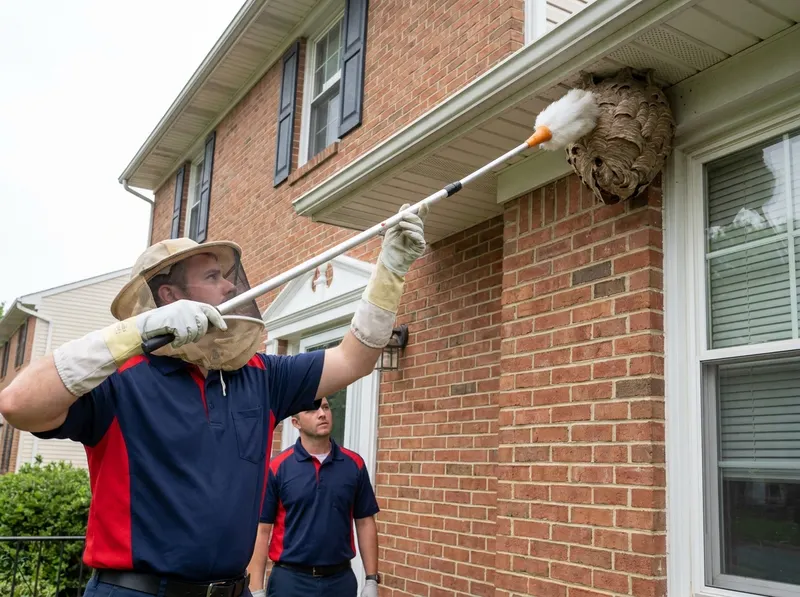
Direct chemical knockdown and physical removal of bald-faced hornet aerial nests, yellowjacket subterranean burrows, and paper wasp colonies. Technicians use pressurized pyrethrin aerosols and protective containment gear to neutralize defensive swarms before removing physical nest combs from soffits, overhangs, and exterior masonry ledges. Underground yellowjacket burrows frequently established in abandoned rodent tunnels receive residual insecticidal dust injections directly into the primary entrance hole, followed by complete physical excavation or sealing once scout activity ceases. Eaves, window lintels, and porch ceilings are treated with micro-encapsulated repelling residuals to deter queen foundresses from initiating replacement paper nests during spring territorial nesting cycles.
Get a quote →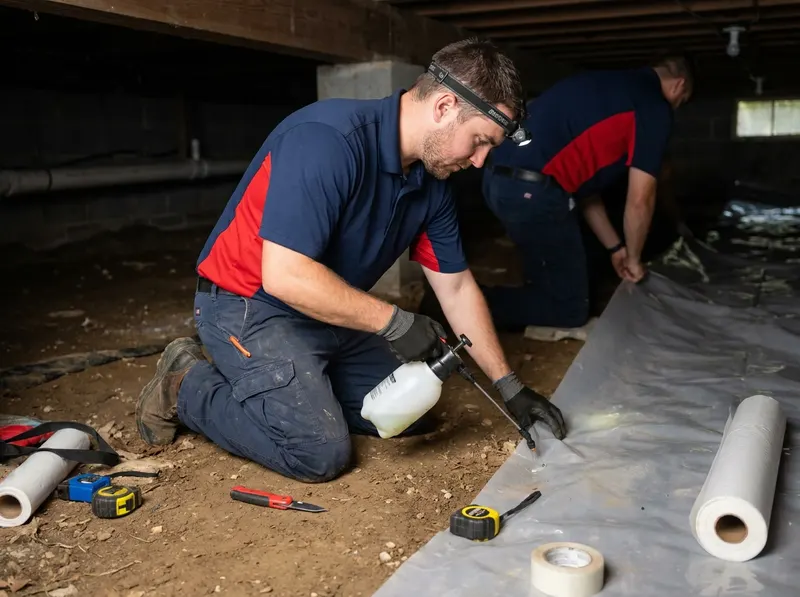
Environmental modification and soil-level barrier installation to eradicate camel crickets, sowbugs, and wood-boring beetles from substructures. The treatment combines soil-surface vapor barriers, interior crawlspace borate wood treatments, and localized micro-dust applications along floor joists to eliminate nesting habitat. Technicians grade unpaved crawlspace floors, lay 10-mil to 12-mil reinforced polyethylene vapor sheeting with overlapping sealed seams, and fasten the material directly to perimeter masonry foundation walls. Borate mineral solutions sprayed onto raw joists and subflooring penetrate cellulose fibers, preventing growth of wood-decay fungi while rendering the wood toxic to subterranean termites and wood-boring beetle larvae.
Get a quote →You get a firm, itemized quote for your pest control service before any work begins, no surprises, no pressure.
Careful prep, tidy work, and a full cleanup when we are done. We treat your home and belongings like our own.
The same trusted, background-checked team from the first call to the final check.
If dealing with an isolated seasonal invasion of pavement ants, silverfish, or paper wasps along eaves, scheduled general perimeter pest control establishes a residual insecticidal band that halts insect travel across foundation footings. If active structural wood destruction is evident from mud tubes, discarded swarmer wings, or hollowed sills, whole-structure subterranean termite treatment with non-repellent liquid termiticides or low-profile bait systems is mandatory. The trade-off centers on treatment scope: general maintenance applications address surface crawling insects at 60 to 90-day intervals, whereas structural termite interventions require perimeter trenching, sub-slab drilling, and annual monitoring arrays to preserve building integrity.
When scratching noises, gnaw marks, or droppings occur in crawlspaces or drop ceilings, mechanical rodent exclusion replaces chemical spraying entirely; steel mesh, copper mesh, and elastomeric sealants secure physical gaps down to one-quarter inch. Surface sprays repel foraging insects outside, but only mechanical masonry sealing, foundation sealing, and directional interior baiting stop gnawing vertebrates from establishing nesting runways. If dealing with nocturnal blood-feeding insects within sleeping quarters, thermal remediation combined with non-repellent residual insecticides is required rather than conventional broad-spectrum fogging, because bed bugs demonstrate wide-ranging pyrethroid resistance; the trade-off involves intensive resident preparation of textiles and temporary room evacuation for 4 to 8 hours versus systemic elimination.
For properties bordering heavily vegetated ravines or standing water zones along the Brandywine River, seasonal barrier misting targeting the undersides of broadleaf shrubs reduces adult biting fly and mosquito activity by approximately 85% to 90%, but it requires repeated monthly cycles from May through September rather than a single permanent intervention.
Every project gets a firm, written price after a free on-site visit. Ranges below for orientation.
Tell us about your pest control service job and we'll send a clear, written quote, usually the same day. Or just call and talk to a real Wilmington pro.
(302) 551-3598
Wilmington properties face distinct pest vectors due to the city's aging brick masonry, slate roof drainage systems, and proximity to the Brandywine Creek and Christina River. In neighborhoods like Wawaset Park and the Highlands, mature deciduous trees provide structural bridges for carpenter ants and white-footed mice to bypass foundation barriers and enter attic flashing along roof eaves. Properties across Quaker Hill, Delaware Avenue, Forty Acres, and Cool Spring frequently feature fieldstone foundations with lime mortar joints that deteriorate over decades, creating subterranean pathways for Norway rats seeking winter refuge from nearby storm infrastructure and municipal transit routes. The damp river basin microclimate surrounding the Wilmington Riverfront and South Brandywine fosters high soil moisture saturation, elevating subterranean termite foraging pressure along wood sill plates and sub-slab structural pilings. Furthermore, historical stone architecture adjacent to Rockford Park and Brandywine Park often lacks modern mechanical termite shields, allowing subterranean Reticulitermes colonies to construct vertical mud exploration tubes across damp interior stone walls without detection until reproductive winged swarmers emerge inside living spaces during spring temperature increases.
Free estimates for Wilmington & the surrounding area.
 Calviro Pest Defense