Carpenter ants do not ingest structural timber like subterranean termites; instead, worker ants excavate smooth, sandpaper-clean galleries through moist, compromised lumber to rear brood. In historic Wilmington…
Carpenter ants do not ingest structural timber like subterranean termites; instead, worker ants excavate smooth, sandpaper-clean galleries through moist, compromised lumber to rear brood. In historic Wilmington neighborhoods like Quaker Hill, Forty Acres, and Cool Spring, aging brick rowhomes often feature original soft-pine framing, historical box gutters, and damp rubble-stone foundations that create ideal nesting corridors. Infestations typically involve an exterior parent nest rooted in damp trees or landscape ties near properties along Delaware Avenue, coupled with multiple dry satellite nests nestled inside roof eaves, window headers, or bathroom wall framing. Effective eradication requires identifying both zones, because treating only interior foraging trails allows the primary outdoor queen to repopulate the structure within 30 to 60 days.
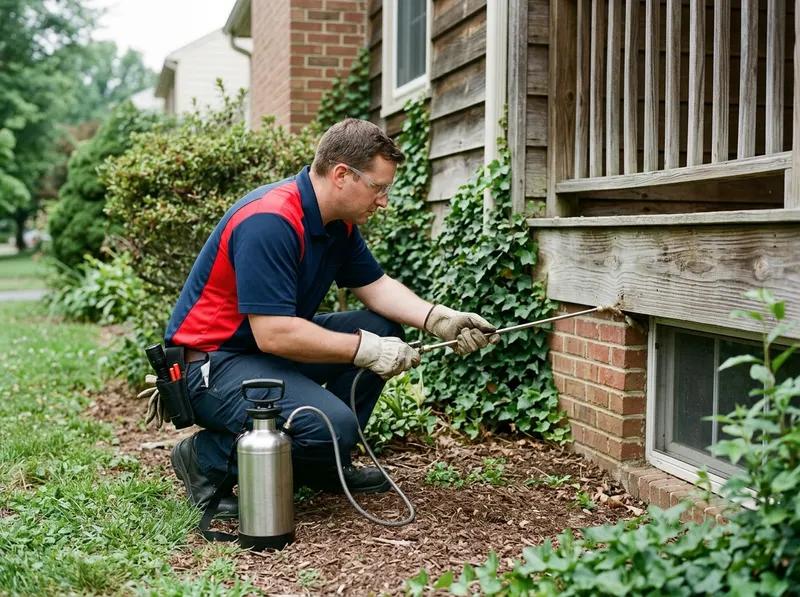
Technicians deploy undetectable liquid non-repellent transfer chemistry along the exterior structural envelope, combined with direct aerosol void treatments and targeted micro-granular bait matrices where sawdust-like frass deposits emerge. In tree-lined enclaves such as Wawaset Park, Highlands, and South Brandywine, expansive shade canopies from heritage oak and beech trees provide natural aerial bridges directly to fascia boards and chimney flashings. Trimming overhanging limbs at least 6 feet back from roof edges disrupts these satellite foraging trails. While surface over-the-counter contact sprays scatter worker ants into deeper wall voids through defensive bud-nesting, structural perimeter injection ensures foraging ants carry lethal active ingredients back to the queen inside the central nursery nest.
Structural management options depend on nesting distribution: localized interior void flushing treats active indoor galleries, while exterior foundation banding stops new colonizers arriving from moist landscape mulch. The trade-off between isolated spot treatments and integrated perimeter protection centers on recurrence control; targeting a single indoor satellite nest costs less upfront but leaves structural timber vulnerable if outdoor parent colonies in nearby stump cavities remain active. Inspections along Baynard Village and surrounding Brandywine Park corridors routinely isolate the root cause to undetected plumbing leaks, worn roofing seams, or ground-level earth-to-wood contacts that soften framing members below standard structural hardness.
Every job gets a firm, written price after a free on-site visit.
Tell us about your carpenter ant management job in Wilmington and we'll send a clear, written quote, usually the same day.
 Calviro Pest Defense